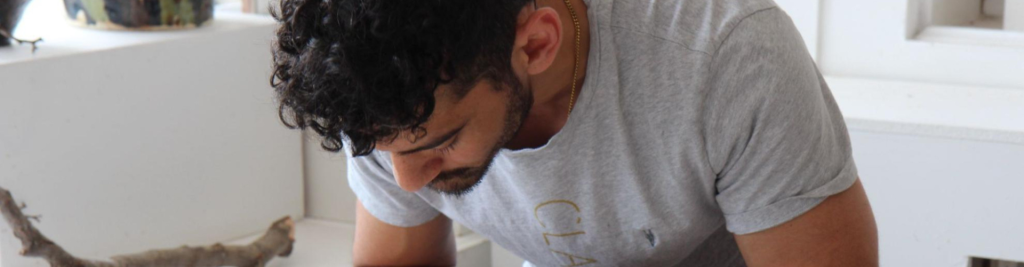
For Adam Williams, clay became both a calling and a canvas. Originally from Trinidad and Tobago, Adam began his artistic journey studying drawing and painting at the Ontario College of Art and Design (OCAD) in Toronto. It was there, he took an introductory ceramics course that pivoted the direction of his creative life. “I got bitten by the bug. I have continued to work in clay since then, but my work is still heavily infused with my drawing and painting background.”
Those years at OCAD instilled in him not only technical skill but also the discipline to think critically and creatively across different forms of medium and expressions. “We’d be at the studio until midnight,” he remembers. “It wasn’t just about learning materials and techniques; it was about developing a way of seeing and questioning.”
Building Clay Space
After returning to Toronto in 2011, Adam taught ceramics at various recreation centres before founding Clay Space in March 2020, a studio located in Toronto’s east end (at Little India). The timing was challenging, as the pandemic lockdown began just weeks after opening, but the experience became part of the studio’s story.
“Clay Space was born out of COVID,” Adam says. “It forced us to be resourceful and to solve problems creatively. That challenge shaped the identity of Clay Space.”
Over the past five years, Clay Space has evolved into a collaborative environment where artists explore not only ceramics but also other creative disciplines. “I enjoy bringing something different to a pottery space,” he explains. “Ceramics doesn’t exist in a vacuum; it is connected to dance, music, poetry, and other cultural practices. When you think that way, you broaden your imagination and your limits.”
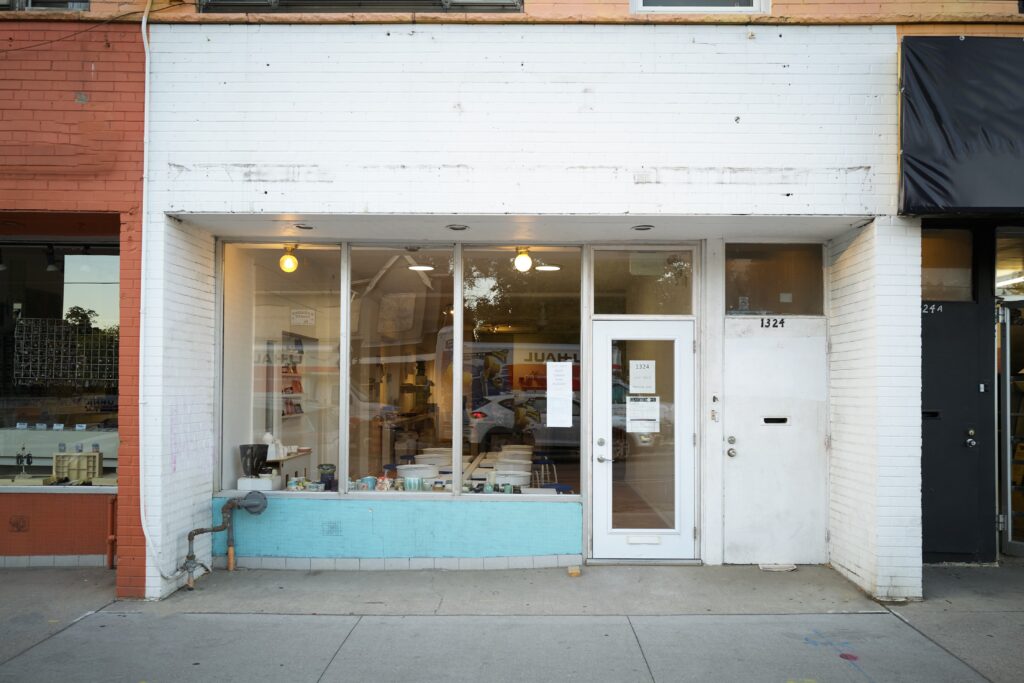
An Evolving Studio and Community
For Adam, the most rewarding aspect of Clay Space has been the people. “Every group of students and artists brings their own energy. The atmosphere shifts, and the studio evolves. It’s exciting to watch how the space changes as new people join and new ideas emerge.”
As Clay Space approaches its sixth year, Adam reflects on the growth and the sense of community that has developed. “I can look back each year and see how we’ve changed. That constant evolution keeps it alive.”
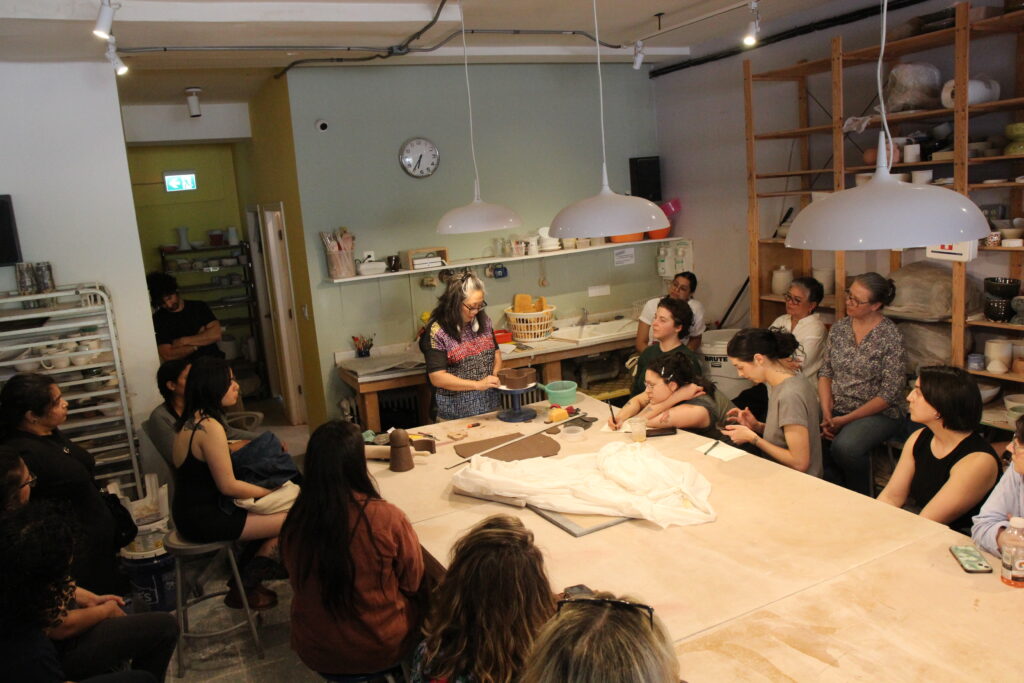
Julie Moon Artist Talk at Clay Space, 2025
A Practice Rooted in Simplicity and Surface
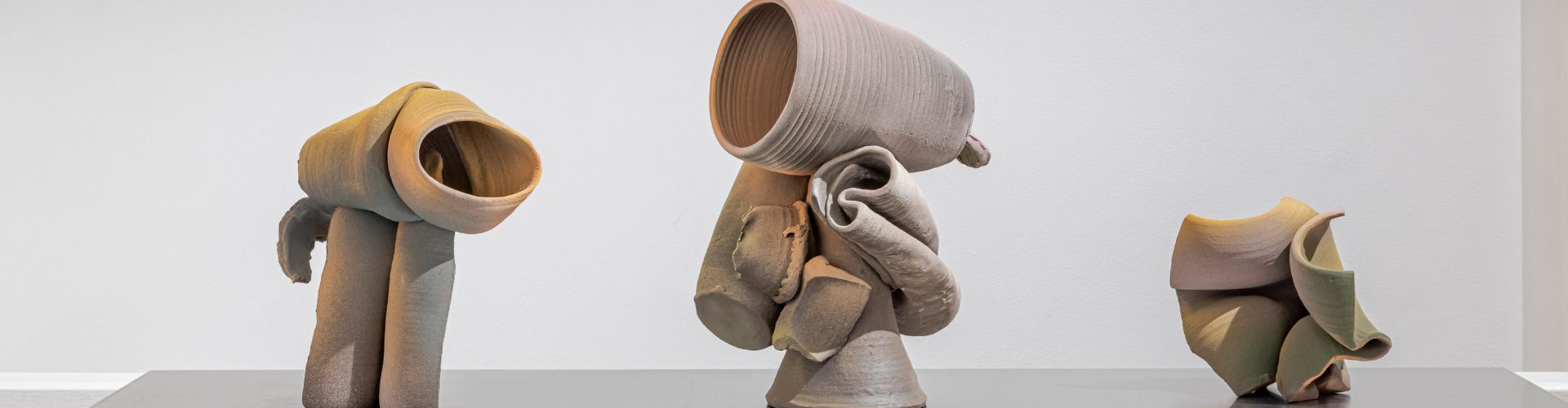
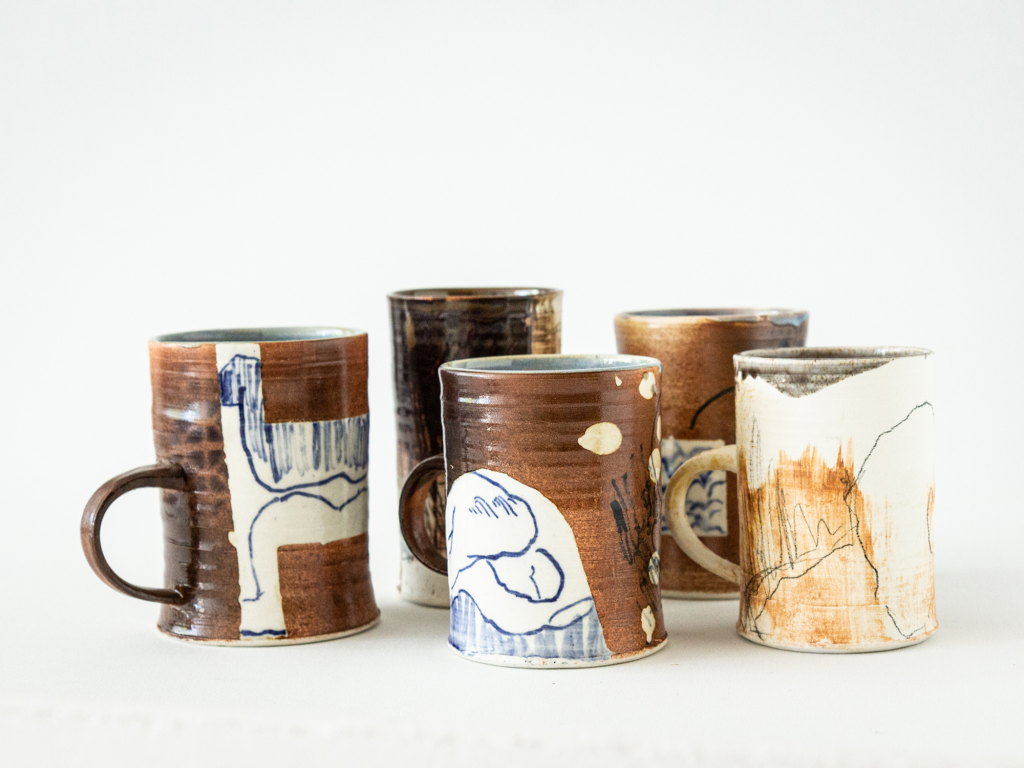
Adam’s work spans functional ceramics and sculpture, with his painter’s sensibility. His forms are deliberately simple, allowing his surfaces to take on complexity through layered imagery, pencil drawing, and stenciling.
“My 3D exploration is restraint. With a simple form, I can be much busier with the surface, playing with depth, composition, and the relationship between rough and smooth textures.”
Adam’s background also finds new life in collaboration. In recent years, he worked with filmmaker Richard Fung and his team on animation project “The Enigma of Harold Sonny Ladoo”, a process that reconnected him to drawing as an independent creative force.
“Working with Richard reminded me that drawing has its own power,” Adam says. “It’s a foundation I can bring into anything—ceramics, sculpture, animation. Collaborating with a team also pushed me to work faster and think differently. It reignited my love for line, rhythm, and storytelling.”
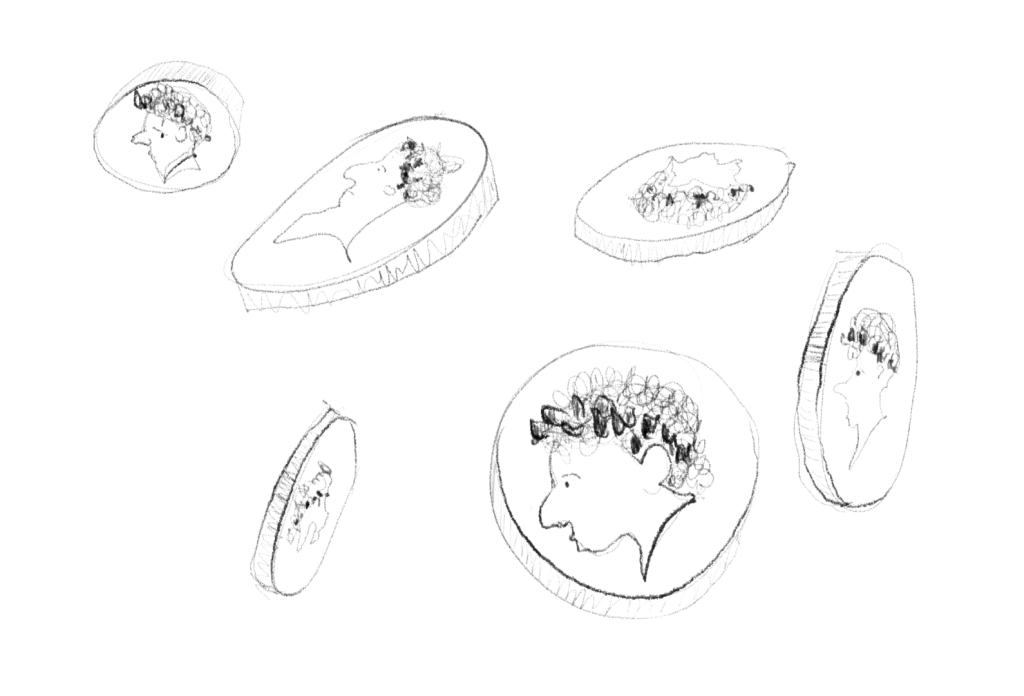
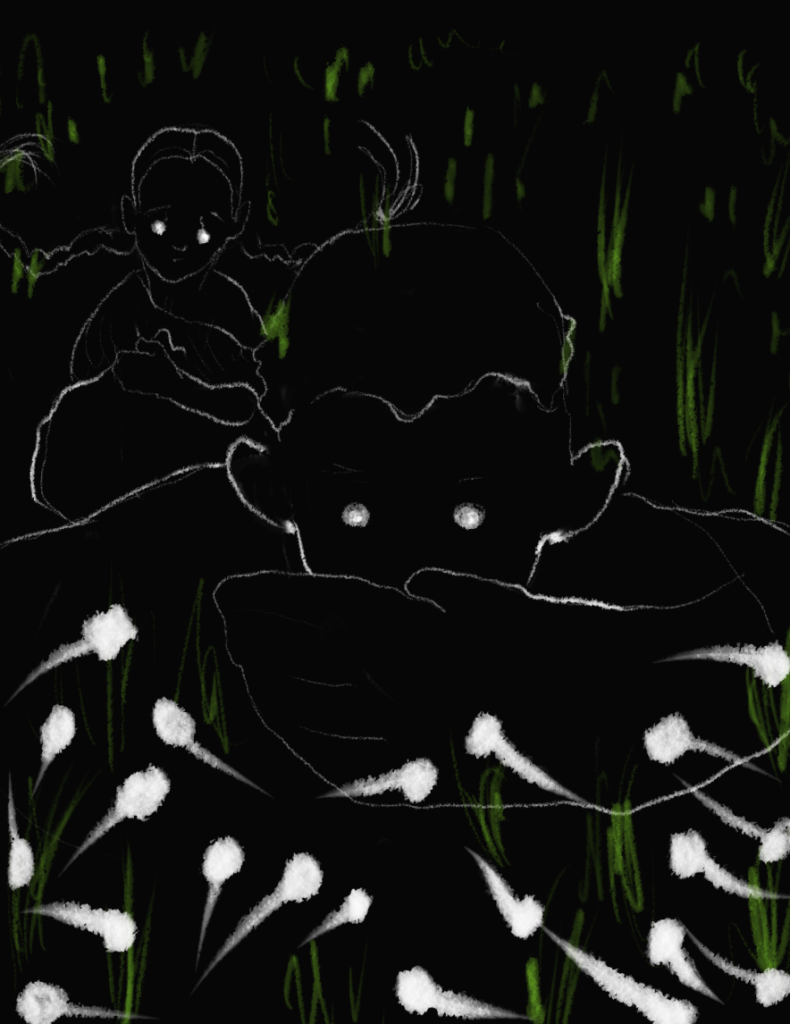
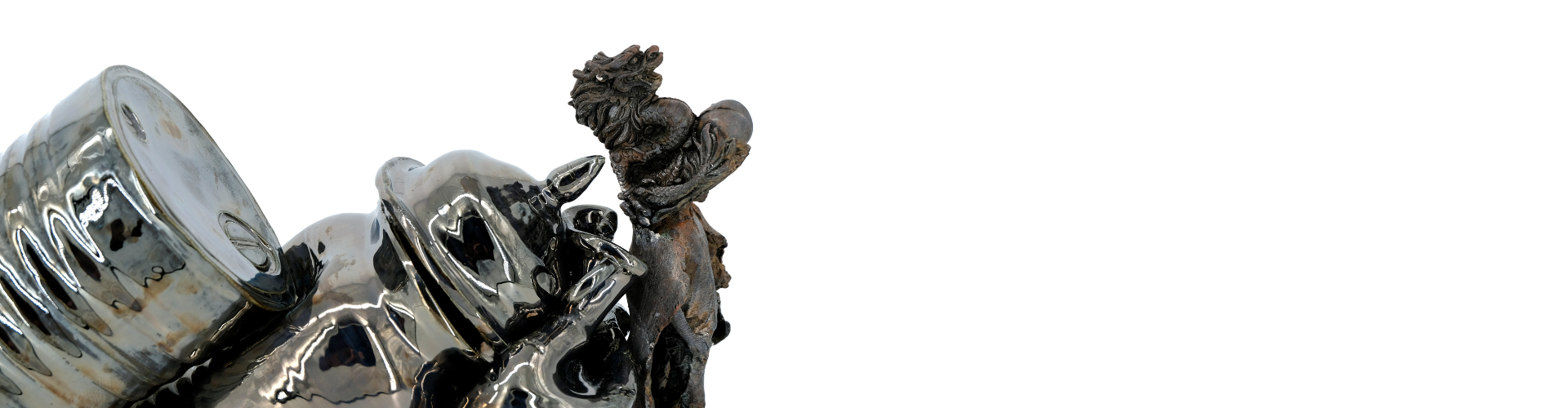
The Enigma of Harold Sonny Ladoo by Richard Fung, 2024
For this year’s Clay Space Holiday Sale, Adam will feature a collection of large mugs, vases, and bowls, each one acting as a canvas for experimentation. The mugs, in particular, reflect his philosophy of merging visual and tactile experience.
“There’s something intimate about holding a mug,” he says. “It’s not just visual; it’s tactile. You read the surface through your hands as much as your eyes.”
Pottery as a Poetic Form
Adam often describes pottery as “The Poetry of Sculpture.”
“Pottery is like prose, free and expansive. Sculpture, on the other hand, comes with rules. It still needs to function. But that limitation is where creativity happens.”
This balance between freedom and discipline informs his entire practice. “I like to listen to the material,” he says. “I don’t force clay to be something it isn’t. There’s honesty in letting it become what it wants to be.”
His approach combines intuition with thoughtfulness, guided equally by the hand and the mind. “I love materials, but I also need an idea behind the work. A piece should connect to something bigger, a narrative, a conversation, or a concept.”
Collaboration and Creative Exchange
That openness extends to his collaborations with other artists, including Thomas Bollmann, a close friend and fellow member of Clay Space. “Thomas came by one day in 2020 needing a few pots fired,” Adam recalls. “It turned into one of my richest friendships. He’s incredibly talented and generous. That’s what I love about the clay community; it’s supportive, not competitive.”
For Adam, the studio has become both a place of making and a place of connection. “Running Clay Space has introduced me to so many amazing people. Every collaboration teaches me something new.”
Looking Forward
As Clay Space moves into its sixth year, Adam is envisioning new directions, from exhibitions to cross-media projects that merge art, storytelling, and community engagement. One idea in development is a show exploring landmarks and punctuation, a meditation on creative beginnings and endings.
“The community keeps evolving,” he reflects. “I don’t know what it will look like next, but I know it will continue to change, and that’s the beauty of it.”
When asked what advice he would share with other artists, Adam emphasizes the importance of being fearless. “Don’t overthink it. Most of us have good instincts; we just doubt them. The key to making good art is making a lot of bad art. Be fearless and just make it.”
About the artist
Adam Williams is a ceramic artist and instructor from Trinidad and Tobago. He studied visual art at the Ontario College of Art and Design in Toronto, Canada from 2000-04 as well as at the University of the West Indies at St. Augstine, Trinidad from 2005-10. He moved back to Canada in 2011 where he maintained a studio practice in both functional ceramics and sculpture while teaching at various recreation centres in Toronto. In March of 2020 he opened his own studio in the East end of the city called Clay Space where he teaches classes as well as collaborates with other artists on various projects.